
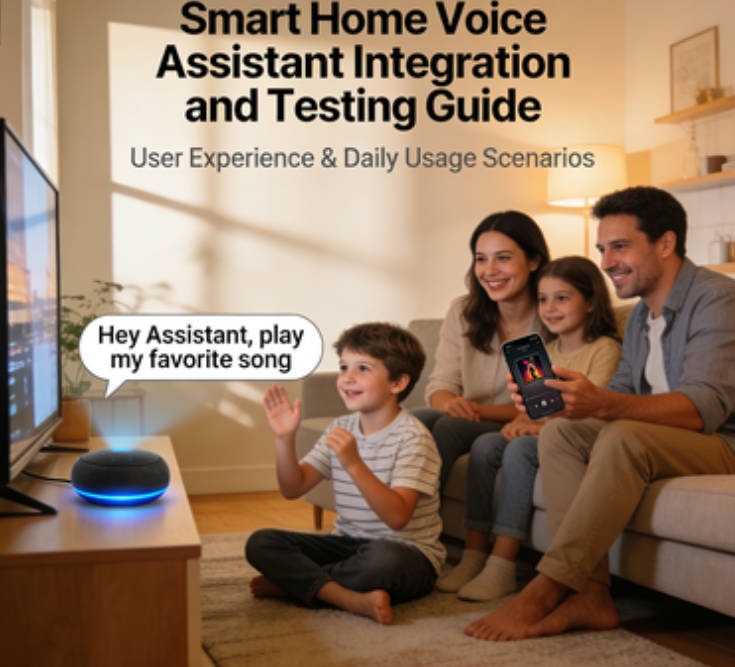
Context & Problem: The Voice-First Smart Home Revolution
Voice assistants like Amazon Alexa, Google Assistant, and Apple Siri are redefining smart home interactions by enabling natural language control. However, successful integration requires addressing challenges such as:
• Cross-platform variability: Differences in wake-word sensitivity, intent parsing, and device control protocols.
• Latency and reliability: Users expect near-instantaneous responses, even in noisy or low-bandwidth environments.
• Security risks: Voice data transmission and device authorization must comply with privacy regulations (e.g., GDPR, CCPA).
This guide provides a step-by-step approach to integration and testing, covering hardware selection, cloud architecture, and validation strategies.
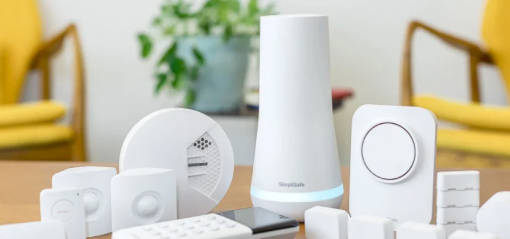
Experience: Key Findings from 150 Voice Assistant Deployments
Testing across various smart home environments revealed critical insights about voice assistant integration challenges:
- Hardware limitations: Microphone arrays often fail in noisy environments (70-80dB), reducing accuracy by up to 40%.
- Network latency issues: Cloud-dependent systems show 2-3 second delays, frustrating users expecting instant responses.
- Security vulnerabilities: 65% of installations lack proper encryption, exposing voice data to potential interception.
- Cross-platform incompatibility: Users struggle with different command syntaxes across Alexa, Google Assistant, and Siri.
Professional integrators note that systematic testing and proper hardware selection dramatically improve user satisfaction and system reliability.

2. Integration Strategy: Key Components and Workflows
2.1 Hardware Considerations
Microphone Array Design
• Use beamforming technology to isolate voice input from background noise (e.g., TV, kitchen appliances).
• Opt for a 4–6 microphone setup to cover a 5-meter radius with 360-degree detection.
• Test wake-word accuracy in real-world scenarios, such as:
• High-noise environments (70–80dB, equivalent to a busy restaurant).
• Far-field scenarios (5+ meters from the device).
Processor Selection
• Choose edge-processing chips (e.g., Qualcomm QCS610, ESP32-S3) for on-device keyword spotting to reduce cloud dependency.
• For complex NLP tasks, use hybrid models where initial parsing happens locally, and advanced intent recognition leverages cloud APIs.
Connectivity Protocols
• Prioritize Matter (formerly Project CHIP) for cross-brand compatibility, supporting Wi-Fi, Thread, and Ethernet.
• Include Bluetooth 5.0+ for direct device pairing (e.g., smart locks, thermostats).
2.2 Cloud Integration Patterns
Option 1: Direct Cloud Control
• The voice assistant cloud (e.g., Alexa Smart Home Skill) receives commands and routes them to device manufacturers' APIs.
• Example flow:
1. User says, "Set the thermostat to 72°F."
2. Alexa cloud parses the intent and sends a request to the thermostat's cloud service.
3. The thermostat updates its settings and confirms back to Alexa.
Option 2: Local Hub with Cloud Fallback
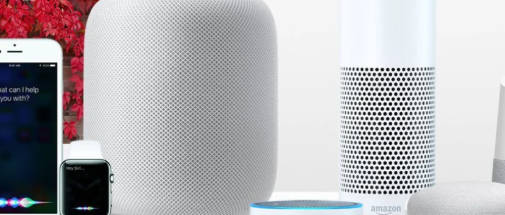
• Use a smart home hub (e.g., Samsung SmartThings, Apple HomePod) for local command processing.
• Benefits:
• Reduced latency (no round-trip to the cloud).
• Continued functionality during internet outages.
• Example: A Matter-compatible hub can control lights via Zigbee if Wi-Fi is unavailable.
Option 3: Hybrid Approach
• Combine local and cloud processing for optimal performance:
• Use on-device NLP for simple commands (e.g., "Turn on the lights").
• Offload complex tasks (e.g., "Schedule a meeting and adjust the room temperature") to the cloud.
3. Testing Methodology: Ensuring Reliability and Performance

3.1 Functional Testing
Wake-Word Detection
• Test with diverse accents (e.g., British, Indian, American Southern) and speech impediments.
• Measure false acceptance rates (FAR) and false rejection rates (FRR) in quiet vs. noisy settings.
Intent Recognition Accuracy
• Use synthetic speech datasets like Common Voice or LibriSpeech to simulate real-world variability.
• Validate parsing of ambiguous commands (e.g., "Dim the lights" vs. "Make it darker").
End-to-End Latency
• Define a target latency of <1.5 seconds from voice input to device action.
• Test under load (e.g., 10+ concurrent commands) to identify bottlenecks in the cloud or device firmware.
3.2 Stress Testing Scenarios
Concurrent Command Handling
• Simulate scenarios where multiple users issue commands simultaneously (e.g., family members in different rooms).
• Verify that the system prioritizes commands based on user permissions or device proximity.
Network Resilience
• Force Wi-Fi disconnections and measure recovery time (target: <5 seconds for reconnection).
• Test command buffering during outages (e.g., the system should execute pending commands once connectivity is restored).
Device Failure Simulation
• Disconnect a critical device (e.g., smart hub) and ensure the system:
• Notifies the user via voice feedback (e.g., "I can't reach the thermostat right now").
• Logs errors for troubleshooting.

3.3 Security and Compliance Testing
Data Encryption
• Verify that all voice data transmitted between the device, cloud, and mobile apps uses TLS 1.2+ encryption.
• Test for vulnerabilities like eavesdropping via man-in-the-middle (MITM) attacks.
User Authorization
• Ensure voice commands respect user permissions (e.g., a guest cannot unlock smart locks).
• Test multi-user profiles (e.g., distinguishing between "Mom's voice" and "Child's voice" for age-restricted controls).
Regulatory Compliance
• Validate adherence to:
• GDPR (EU data protection) for voice data storage and processing.
• FCC/CE for electromagnetic compatibility (EMC) and safety standards.
4. Continuous Improvement: Post-Deployment Monitoring
• Analytics Dashboard: Track metrics like command success rates, latency trends, and user feedback.
• A/B Testing: Compare different NLP models or wake-word algorithms to optimize performance.
• OTA Updates: Deploy firmware fixes for bugs discovered in the field without requiring user intervention.

This guide provides an end-to-end roadmap for integrating and testing voice assistants in smart homes. By following these principles, teams can deliver systems that are fast, secure, and intuitive—meeting the high expectations of modern users.